Your press-fit connection is only as good as the tube behind it.
Imagine your back left wheel isn’t perfectly round. As it rotates, it wobbles or bounces instead of rolling smoothly, putting uneven forces through the wheel and axle. Now imagine the wheel is perfectly round, but its hub sits slightly off-centre. It can still rotate, but the uneven distribution leaves performance compromised, causing mechanical stress, the tire wears quicker, increasing friction and ultimately, not long until you go from rolling smoothly down the road into an unexpected detour.
Copper tube has a similar phenomenon that manufacturers must control to ensure installers are using the highest quality tube on their installations.
The internal bore and outside diameter (OD) can both be round, yet the tube can still have a wall that is thicker on one side than the other. That’s eccentricity, and while it might not be obvious at a glance, it can make a real difference to tube performance and lead to premature deformation and failure, particularly when pressure, bending or press-fit connections come into play.
From plumbers to mechanical contractors, to engineers, understanding wall thickness is about more than meeting a dimension on a drawing. It’s about knowing the material you’re working with has been manufactured to perform consistently, successfully and reliably, and the hard yards of precision and quality of the tube have been accounted for.
Concentricity, eccentricity and wall thickness explained
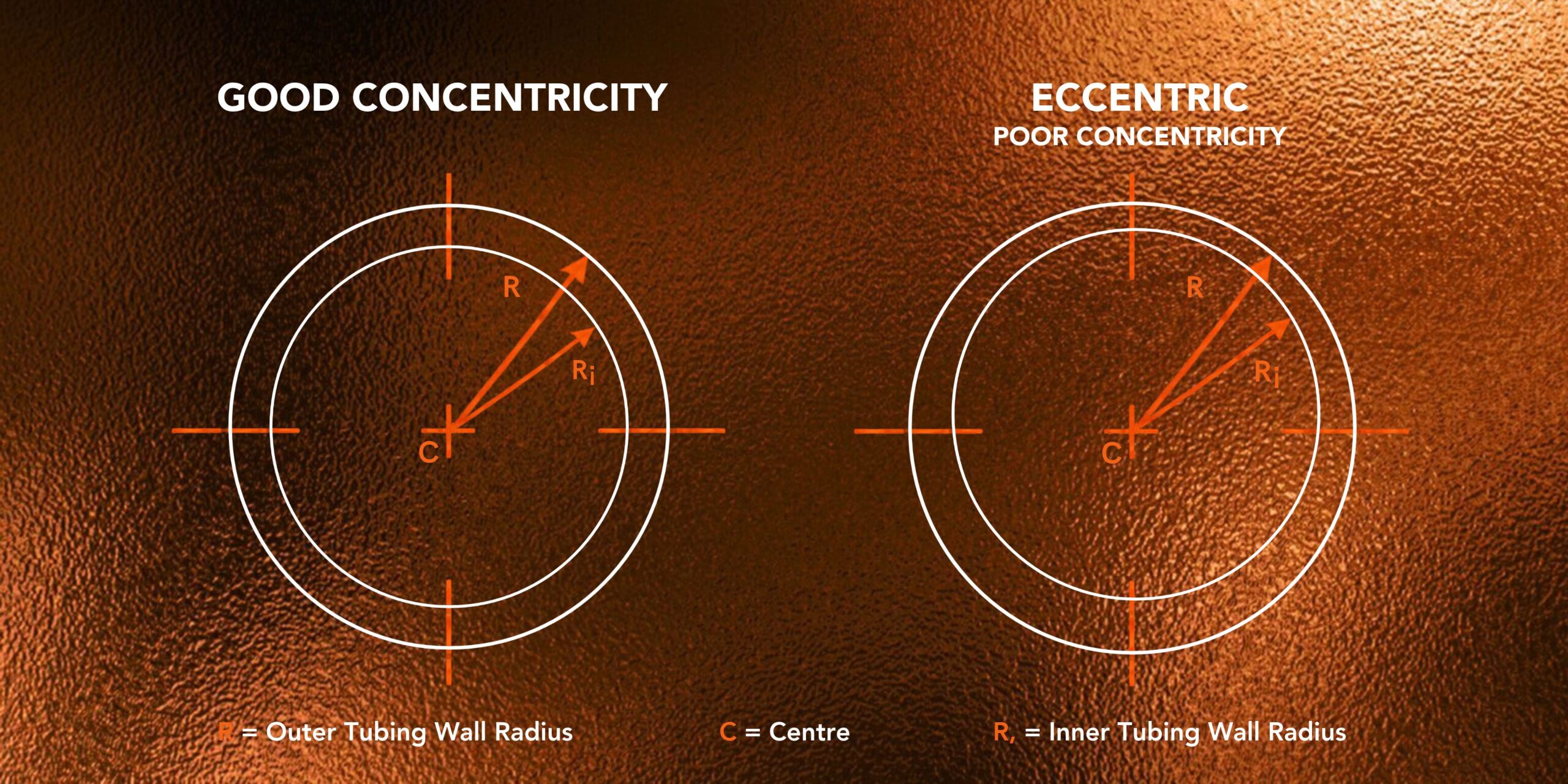
Figure 1
Concentricity describes how closely the centre of a tube's internal bore aligns with the centre of its outside diameter. When those centres align, the wall thickness is uniform around the circumference. When they don't, the wall becomes thicker on one side and thinner on the other.
For a 20mm copper tube with a 1mm wall, the bore should sit dead centre to give you an even 1mm wall all the way around, but if it's off-centre, one side will be thicker and the other thinner (Figure 1).
The greater the offset, the greater the variation in wall thickness. This variation is known as eccentricity.
Every tube has a specified nominal wall thickness, but nominal thickness is not necessarily the thickness at every point on the tube. Actual wall thickness can vary around the circumference and along the length, which is why effective manufacturing controls and inspections matter.
Why does this matter? Glad you asked…because a tube's performance depends on the material actually present, not just the number printed on the specification. A thinner section has less material available to resist pressure and mechanical loading, potentially affecting structural integrity and service life.
For engineers, this is particularly relevant when specifying precision tube, pressure-containing components or safety-critical applications. Where wall uniformity is important, it is worth considering whether a maximum wall thickness variation should be specified alongside the standard bore and OD tolerances.
It's also worth asking suppliers how they verify concentricity and whether multi-point wall thickness measurements form part of their inspection process, as this can be an issue across different points of the tube.
Roundness and concentricity are not the same thing
Roundness or ovality measures how closely a single circular surface, such as the bore or OD, matches a true circle at a given cross-section. As concentricity looks at the relationship between the centres of those two circles, a tube can have a round bore and a round OD while still having uneven wall thickness because the two centres are offset.
In other words, passing separate roundness checks does not automatically mean the wall thickness is uniform.
What happens when wall thickness varies?
Small variations can have consequences well beyond the manufacturing floor. The impact depends on the tube's application, material, temper, dimensions and operating conditions, but several factors deserve attention.
Pressure performance and structural integrity
Tube wall thickness contributes to its ability to withstand internal pressure and mechanical loads. A thinner section can become the limiting point, reducing the margin available to resist stress. Design calculations and applicable standards must account for the relevant minimum wall thickness and material properties. This has the potential to effect key parameters, such as flow rate and burst pressure (Gao, Shah & Amineh 2016).
Bending and installation
Tube needs to perform predictably during installation. Uneven wall thickness can contribute to inconsistent deformation, creating weak points during bending or other forming operations, depending on the tube and process. That can make achieving a consistent finish more difficult.
Press-fit connections
Press-fit systems rely on the tube and fitting working together as designed. The pressing process applies force and deforms the tube to create the connection. Consistent wall thickness helps provide more predictable deformation conditions, supporting the integrity of the finished joint. When wall thickness is consistent, the tube provides more predictable conditions during pressing, helping support a reliable connection when installed in accordance with the system manufacturer's requirements.
The quality of a press-fit system is only as good as the components used to install it. Choosing copper tube manufactured with effective wall thickness controls helps reduce uncertainty and gives plumbers and contractors greater confidence in the material they're working with.
Long-term reliability
A thinner section provides less material at that location. Depending on the service conditions, this can reduce the margin against localised damage, corrosion penetration, or mechanical stress. Wall thickness alone does not determine service life, but it is an important part of the overall picture.
Compliance and cost
Tube that falls outside its specified requirements can lead to failed inspections, rejected product, rework and wasted material. Consistent manufacturing and appropriate quality checks help reduce these risks before the tube reaches the stockist, and most importantly your job.
The takeaway is straightforward: consistent tube dimensions make for more predictable installation. Verifying wall thickness helps establish that the product meets the requirements of its intended application.
How is concentricity measured?
Concentricity cannot be confirmed by measuring the OD alone, or by checking the bore independently. The relationship between the two surfaces, and the wall thickness between them, must also be considered.
One practical approach is to measure wall thickness at multiple points around the circumference of a tube cross-section. The results reveal the thickest and thinnest sections and help quantify the variation.
A simple way to express the relationship is to compare the minimum and maximum measured wall thicknesses:
Wall thickness ratio (%) = minimum wall thickness ÷ maximum wall thickness × 100
A result closer to 100% indicates more uniform wall thickness at the measured cross-section. This is a useful comparative indicator, but it is not a substitute for the applicable product standard, specified tolerances or an agreed inspection method.
Measurements at a single cross-section also tell only part of the story. Wall thickness can vary along the tube's length, so appropriate sampling and in-process monitoring are important when verifying overall manufacturing consistency.
For critical applications, specify the required wall thickness limits and variation, agree on the measurement method, and it is especially critical to establish how the supplier will verify and document compliance.
Our KemCore Technology
All copper tube produced by MM Kembla utilises our own KemCore Technology, which manages and measures tube eccentricity along its length. By monitoring wall thickness variation and applying process controls, KemCore helps maintain a high level of concentricity and dimensional consistency.
KemCore is designed to help minimise wall thickness variation, reduce the risk of localised thin sections and maintain the consistency expected from quality copper tube.
KemCore sits within a broader manufacturing and quality-control process. Checks at different stages help identify dimensional variation and ensure finished tube meets the applicable requirements.
Our controls include:
- Extrusion eccentricity checks: Monitoring wall thickness variation throughout the whole extruded shell during the extrusion process.
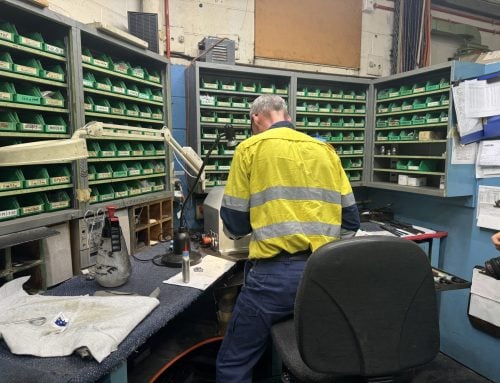
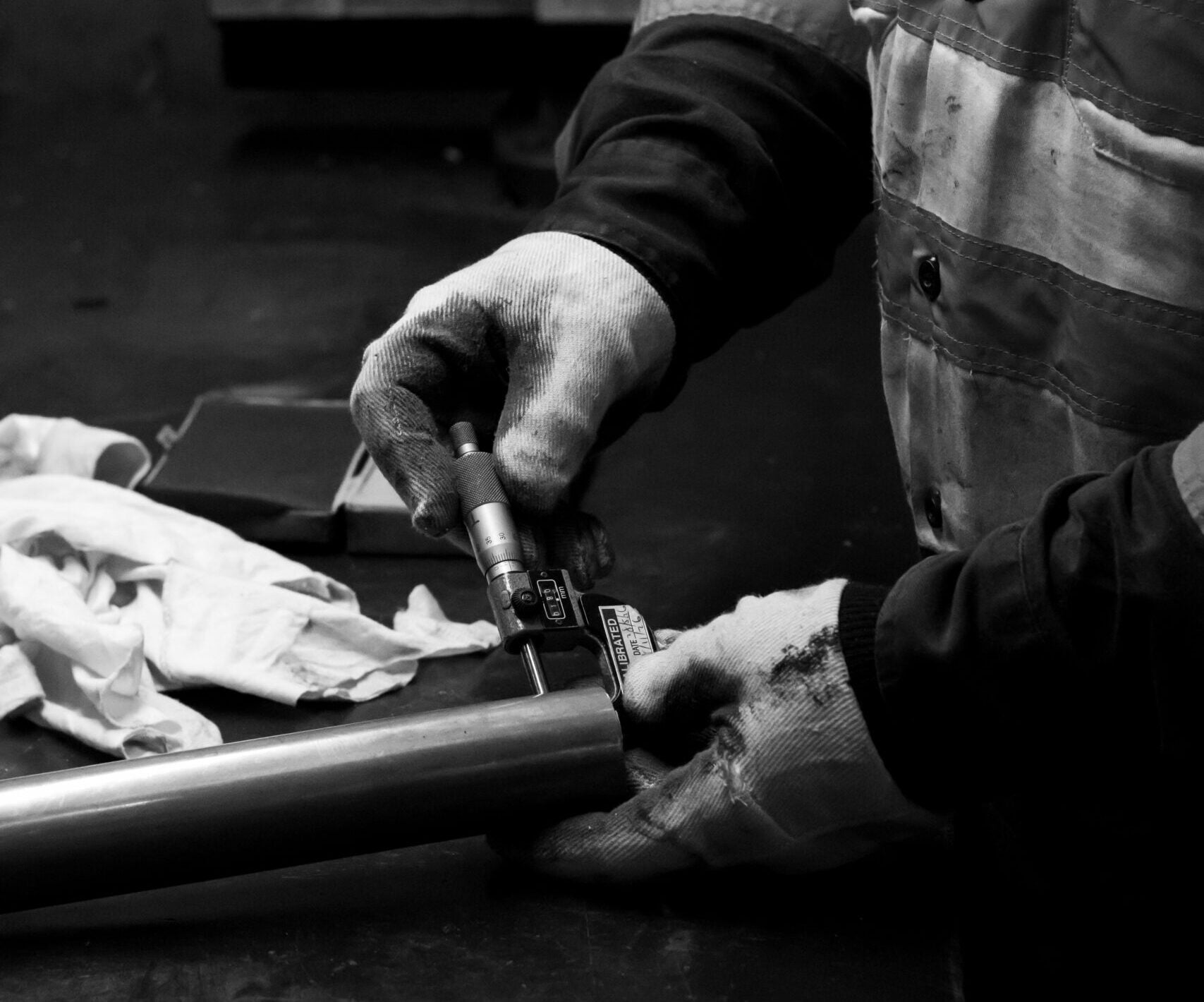
- Regular manual micrometer dimensional checks: Verifying critical dimensions, including tube size and wall thickness, throughout production (Figure 3)
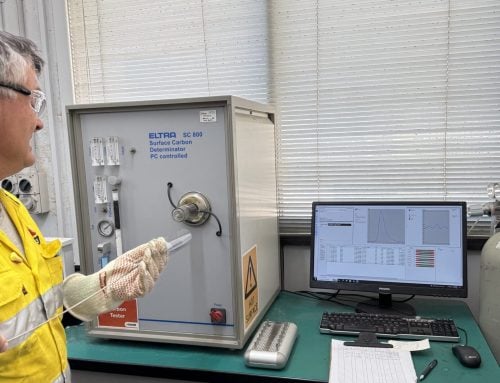
- In-process eccentricity measurement: Using dedicated measurement equipment at relevant stages of manufacture.
- Rejection controls: Identifying and removing product that does not meet the strict concentric required criteria. If it is not concentric, it gets recycled and melted again.
- Finished-product inspection: Taking samples at regular intervals to verify dimensions, wall thickness and quality against the applicable requirements.
Consistent process conditions, appropriate tooling, regular dimensional inspections and effective rejection controls all play a role in maintaining superior tube quality. Together, these measures help manage variation throughout production, rather than relying on final dimensional inspection alone, as others may do.
The bottom line
The important distinction is between variation around the circumference and variation along the length.
For manufacturers, controlling these variables helps maintain dimensional consistency and reduce non-conforming product. For customers, it provides greater confidence that the tube supplied is fit for its intended purpose.
Concentricity might not be the first thing you check when selecting copper tube, but it truly matters. Uneven wall thickness can affect structural margins, forming behaviour and the consistency of press-fit connections.
Choose copper tube engineered for consistency. Unlike the rest.
Kembla. Copper. Unrivalled.
References and Further Reading
Gao, M. B. Shah and R. K. Amineh (2016), “Assessment of Eccentricity for Multiple Nonmetallic Pipes Using Microwave Sensing,” in IEEE Transactions on Instrumentation and Measurement, vol. 71, pp. 1-7, 2022, Art no. 8000707, doi: 10.1109/TIM.2021.3134322.