
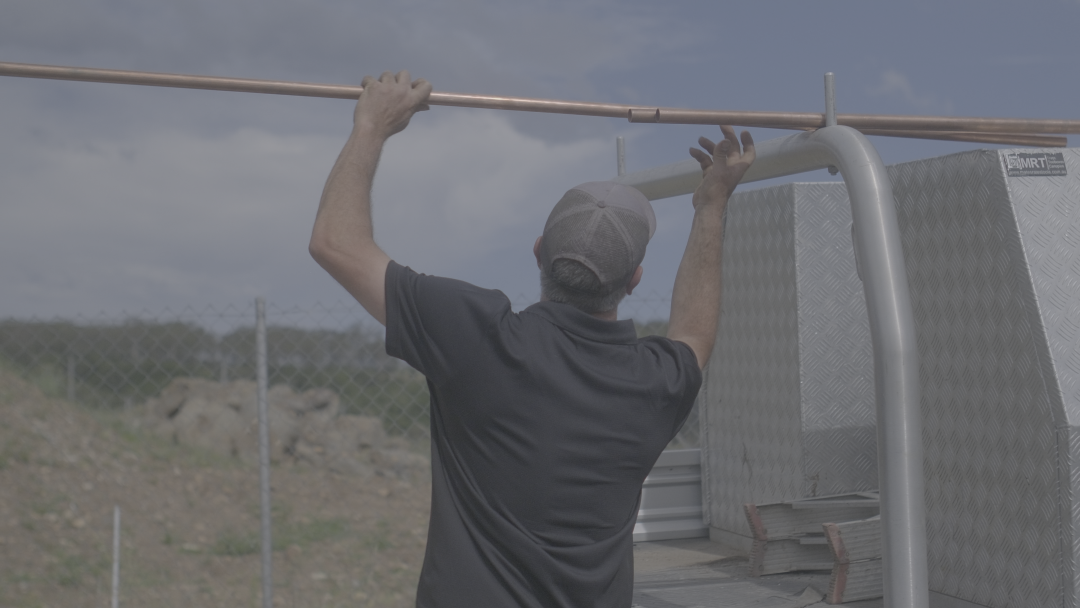
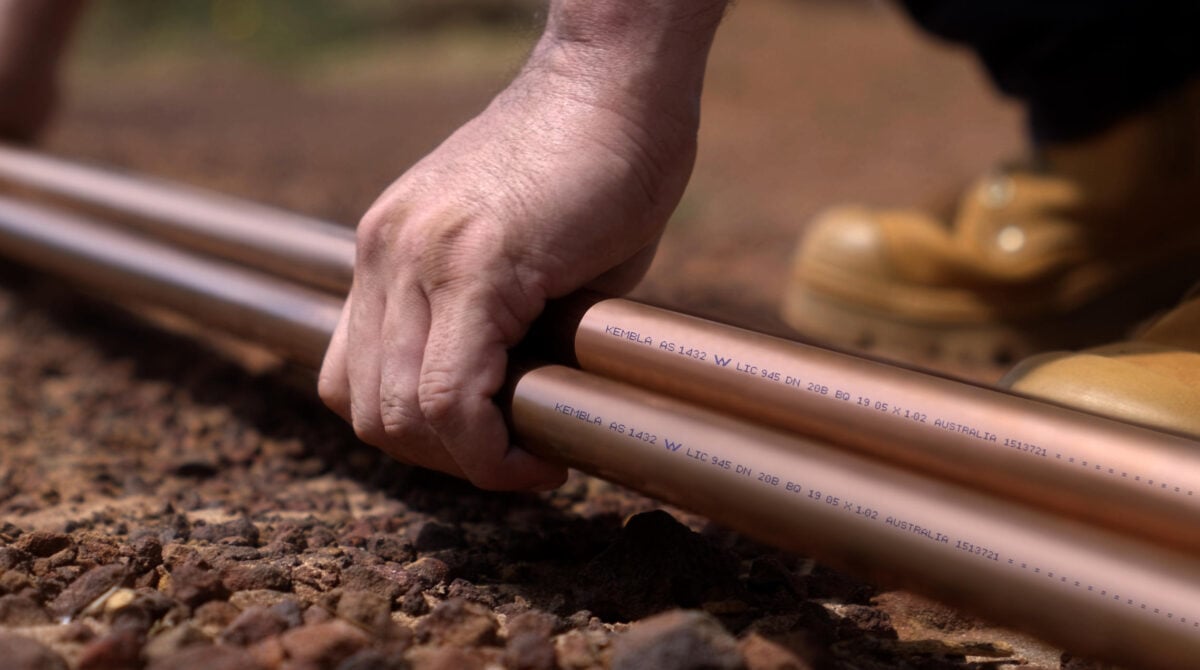
Ask an experienced plumber why they choose Kembla copper tube and you’ll get a few different answers. Some will talk about the quality, the reliability, others will tell you they’ve been using it for 20 years and it’s never let them down.
The common thread being the confidence that comes from putting a product in the wall and knowing it won’t come back to bite them.
That confidence is built on more than a century of Australian copper tube manufacturing, a depth of technical knowledge that others can’t replicate and a product that performs in ways that go well beyond what most people realise when they’re standing at a merchant counter.
It Starts with the Material
Good copper tube starts before it gets anywhere near the factory. It starts with what goes in.
The starting material determines everything that follows: the consistency of the wall thickness, the predictability of bend behaviour, the cleanliness of the internal surface and the reliability of every join made in the field.
Tube drawn from inconsistent or lower-grade feedstock introduces variability that shows up in the work. Whether that’s joins that need more coaxing, bends that don’t quite behave and a job that takes longer than it should, it all costs valuable time and resources.
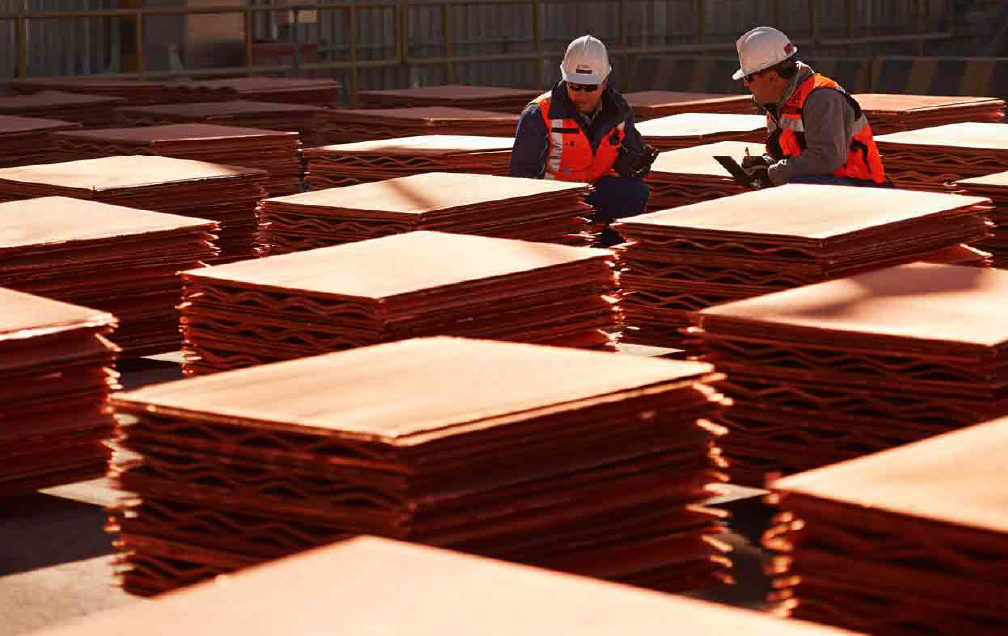
87% of Kembla tube is manufactured in Australia from LME Grade A copper cathode, sourced from BHP Olympic Dam in South Australia and is manufactured using KemCore Technology, a proprietary process that controls wall thickness eccentricity across every length, so the tube that comes off the line behaves the same way every time, regardless of whether it’s the first length or the last.
For plumbers, that consistency is the difference between a job that runs smoothly and performs over time and one that doesn’t.
What’s Actually in the Water
Most people think about copper tube as a delivery system for water. What they don’t always consider is that the pipe itself has an active role in the quality of what comes out the other end and ultimately, in our bodies.
Copper is naturally antimicrobial. Its surface inhibits the growth of waterborne bacteria through what’s known as the oligodynamic – copper ions released from the surface are toxic to a wide range of microorganisms at even very low concentrations. Research conducted by the KIWA water quality research institute found that Legionella concentration in copper pipe water systems was three times lower than in cross-linked polyethylene (PEX) systems under comparable conditions. Studies have also shown inhibitory effects against E. coli, Pseudomonas and other bacteria that can cause serious waterborne illness (van der Kooij, et. al., 2005).
The concentrations involved are well within World Health Organisation guidelines — in overnight stagnant water in copper tube, copper leaches at around 0.6mg per litre, well below the WHO’s recommended limit of 2mg per litre.
Plastic alternatives present a different concern. Unlike copper, whose composition is clearly defined, tested and traceable, plastic pipe formulations are proprietary — manufacturers are not required to disclose the full composition of what goes into them. Research has shown that numerous chemical substances in plastic piping have the potential to migrate into drinking water, with documented potential effects on liver, kidney, reproductive and immune system function. Copper doesn’t carry that uncertainty. Its properties are known, its behaviour is understood and it has been used safely in potable water systems for thousands of years.
For plumbers working on homes, schools, hospitals and aged care facilities, this isn’t an abstract consideration. It’s what they’re putting their name on.
Unrivalled Knowledge
Kembla is not just a copper tube manufacturer — it’s the only copper tube manufacturer in Australia, and that distinction carries practical value.
The knowledge embedded in Kembla’s operation, in the metallurgists, engineers and technical specialists who have spent careers understanding how copper behaves across every application, is available to every plumber and contractor who needs it. When a project involves an unusual specification, a complex system design or a material question that isn’t answered by a datasheet, Kembla’s technical team has the depth to help — not because they’ve read about it, but because they’ve manufactured copper tube for over 110 years and they understand the material from the inside out.
The Reason They Keep Coming Back
The plumbers who choose Kembla aren’t doing it out of habit. They’re doing it because when you put your name to a job, the last thing you want is a phone call six months later because of a product failure.
Kembla copper is made from CopperMark certified copper cathode, manufactured to Australian standards and carries GreenTag GreenRate Level A certification. It’s stocked through a national network of merchant partners and backed by a manufacturer that has been doing exactly this, in exactly the same place, since 1916.
The product is incomparable. The knowledge behind it is unparalleled. And for plumbers who take the quality of their work seriously, that’s a choice that’s unrivalled.
Kembla. Copper. Unrivalled.
References:
van der Kooij, D., Veenendaal, H. R., & Scheffer, W. J. H. (2005). Biofilm formation and multiplication of Legionella in a model warm water system with pipes of copper, stainless steel and cross-linked polyethylene. Water Research, 39(13), 2789–2798.