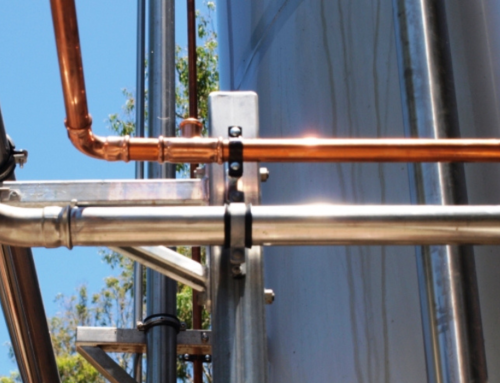

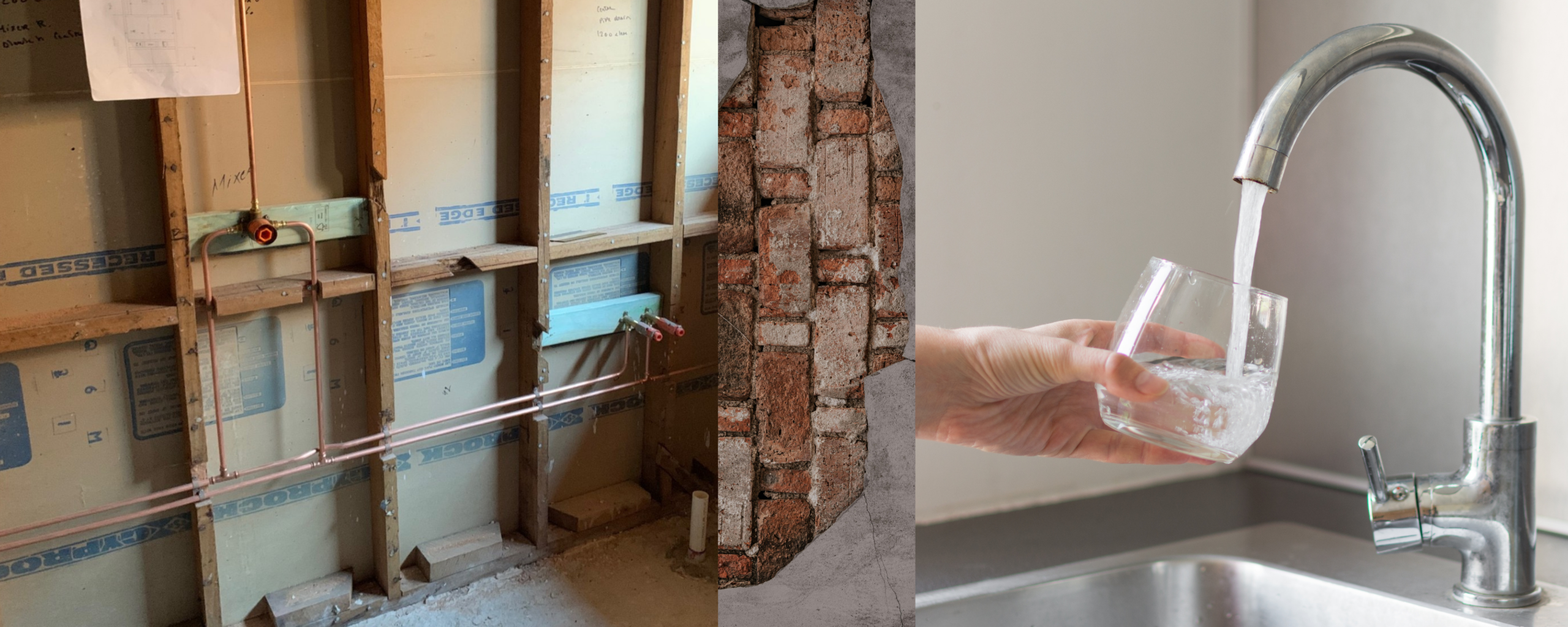
Every time you turn on the tap, you’re trusting more than the water itself. You’re trusting the pipe behind it. But the material carrying that water matters more than you might think.
Every glass of water, every shower and every meal involves the plumbing hidden behind your walls. Therefore, the material used to transport your drinking water plays an important role in the long-term performance, reliability and hygiene of your home’s plumbing system and, alarmingly, your families health and well-being becomes collateral.
For generations, Australian homes and the most respected and trusted Australian plumbers and tradesmen have trusted copper.
And for good reason.
Trusted by those who know
Copper has carried drinking water for thousands of years, trusted by generations. In fact, the first known copper tube water system installation was laid in an ancient Egyptian temple, almost 5,000 years ago (via. ICA).
Today, copper remains one of the world’s most trusted plumbing materials because it delivers proven performance, exceptional durability and long-term reliability when installed correctly.
Unlike many materials, copper doesn’t just transport water, it protects the integrity of the plumbing system itself.
1. Naturally Hygienic
Coppers most unique superpower is something you can't see.
Naturally possessing antimicrobial properties, there is nothing like it. Research has ratified that copper surfaces can significantly reduce many harmful bacteria compared with many other common materials, helping limit microbial growth on the pipe surface.
Water flowing through copper pipes does not trigger aggressive corrosion, and over time, a thin oxide layer forms inside the pipes, protecting the tube integrity and slowing further corrosion.
Its hygienic properties can fight and inhibit the proliferation of bacteria coming in contact with its inner surface, like legionella pneumophila, combatting the build up of germs and bacteria, like legionella.
Think about your sacred oral hygiene, for a second…
Hospitals and healthcare facilities around the world continue to specify copper piping as the material of choice for many critical applications, including the transportation of medical gases – like pure oxygen because of these proven properties.
Plastic alternatives don't carry these same antimicrobial properties. In applications where the health of building occupants is a genuine consideration, copper's natural performance advantage is a meaningful specification point — not just a legacy choice.
Most people think about copper tube as a delivery system for water. What they don't always consider is that the pipe itself has an active role in the quality of what comes out the other end and ultimately, in our bodies.
2. Health is Wealth
When they yearn on about "the greatest wealth is health", they really do mean it. Copper is an essential nutrient and, therefore, indeed, vital to the health of humans, animals and plants.
Copper is an essential trace element, commonly found at low levels in natural water bodies, to maintain good health. Its presence at low levels is safe and beneficial, but monitoring and proper water management are important to avoid excessive exposure.
Copper has been trusted in Australian homes for generations, and it's not just because it's strong and reliable. According to the International Copper Association (ICA), copper plays an important role in keeping our bodies healthy, supporting brain function, healthy development during pregnancy, and the body's natural ability to heal and repair.
You might be surprised to learn that small amounts of copper occur naturally in drinking water. Although, most of the copper our bodies need (more than 90%) comes from the food we eat. Australia's National Health and Medical Research Council (NHMRC) sets strict drinking water guidelines, with a health-based limit of 2 milligrams per litre (mg/L) and an operational guideline of 1 mg/L to help prevent taste and staining issues.
For homeowners, that's good news. Australia's water suppliers regularly monitor water quality, and copper levels in major Australian drinking water supplies are typically around 0.05 mg/L and generally remain below 0.8 mg/L—well under the 2 mg/L health guideline. Combined with the proven durability and reliability of copper plumbing, it's another reason families have confidently relied on copper to deliver clean, safe drinking water for decades (via. Australian Drinking Water Guidelines).
3. The Plastic Quality Control Dilemma
In addition, copper tube can release only copper ions into water, which are necessary for the metabolism of our body.
By inhibiting the growth of waterborne bacteria through its oligodynamic effect, copper ions released from the surface can help suppress a wide range of microorganisms, even at very low concentrations. Research conducted by the KIWA water quality research institute found that Legionella concentration in copper pipe water systems was three times lower than in cross-linked polyethylene (PEX) systems under comparable conditions. Studies have also shown inhibitory effects against E. coli, Pseudomonas and other bacteria that can cause serious waterborne illness (van der Kooij, et. al., 2005).
The concentrations involved are well within World Health Organisation guidelines — in overnight stagnant water in copper tube, copper leaches at around 0.6mg per litre, well below the WHO's recommended limit of 2mg per litre.
Plastic alternatives present a different concern. Kembla copper tubes composition is clearly defined, tested and traceable, unlike any other alternative materials on the market. No plastics, pigments, VOCs, or other synthetic compounds are introduced into the water through the Kembla copper tube. Unlike copper, plastic pipe formulations are proprietary — manufacturers are not required to disclose the full composition of what goes into them. Research has shown that numerous chemical substances in plastic piping have the potential to migrate into drinking water, with documented potential effects on liver, kidney, reproductive and immune system function. Copper doesn't carry that uncertainty. Its properties are known, its behaviour is understood and it has been used safely in potable water systems for thousands of years (via. ICA).
4. Withstands the Test of Time
Your plumbing is one of the biggest investments hidden inside your home.
Whilst service life does ultimately depend on water quality, installation and operating conditions, copper tube regularly delivers service life exceeding 50 years when correctly designed and installed under suitable water conditions.
That means fewer replacements.
Through naturally building the superior internal lining that provides improved corrosion resistance, copper tube is unlike any other material in the market. This unique attribute provides for higher flow rates with minimum resistance compared to non-metallic piping systems.
Topping this, the inherent strength of copper tube provides protection to external damage; puncture, abrasion and vibration whilst offering a wide operating range for internal pressure and vacuum. Furthermore, copper tubes are impervious to oxygen, insecticide, solvents and toxins, considered non-flammable and does not emit toxic fumes during a fire (via. ICA).
That means fewer repairs.
Greater peace of mind. A once-in-a-generation cost for many Australian homes and buildings.
Read more about coppers durability and performance 'Built for Here'
5. Stress = Less
Copper is one of nature's best conductors of heat with excellent thermal conductivity in exchange of hot and cold fluids.
That means hot water systems transfer heat efficiently, helping reduce energy losses while delivering hot water quickly throughout the home.
Whether it's hot water, hydronic heating or air conditioning systems, copper's thermal performance continues to make it the preferred material for high-performance installations.
Whilst copper may be an initial investment for some, there's more money in your pocket when it comes to bills and potential maintenance, often leading to less financial stress or strain.
At the end of the day, Australia’s most trusted plumbers understand one simple truth:
The cheapest pipe today isn’t always the cheapest pipe over the life of the home.
Copper has earned its reputation through decades of proven performance.
It’s why it continues to be specified across homes, hospitals, schools, commercial buildings and critical infrastructure throughout Australia.
Your walls hide more than pipes.
So… before you pour, know what’s in store.
Give your family the confidence of proven Australian copper. Insist on Kembla.
Kembla. Copper. UNRIVALLED.
Trusted by those who know.
Sources & References
Statistics and claims
- van der Kooij, D., Veenendaal, H. R., & Scheffer, W. J. H. (2005). Biofilm formation and multiplication of Legionella in a model warm water system with pipes of copper, stainless steel and cross-linked polyethylene. Water Research, 39(13), 2789–2798.
- International Copper Association Australia — copper.com.au
- International Copper Association (ICA) / Copper Alliance — copperalliance.org
- Copper Development Association (CDA) — copperalliance.org
- Australian Building Codes Board WaterMark Certification Scheme
- GreenTag International — greentagaust.com.au
- The Copper Mark — coppermark.org
Further reading
- Australian Standards AS 1432 — Copper tubes for plumbing, gasfitting and drainage applications
- Australian Standards AS/NZS 1571 — Copper tubes for air conditioning, refrigeration and heat pump applications
- Australian Drinking Water Guidelines — National Health and Medical Research Council — nhmrc.gov.au
- WHO Guidelines for Drinking-water Quality (3rd Ed.) — World Health Organization — who.int
- MM Kembla Hydraulic Design Manual (Plumber’s Handbook 10th Ed.) — kembla.com/wp-content/uploads/2023/11/The-Plumbers-Handbook-10th-Edition-2023.pdf
- Human Health — copper in water — International Copper Association Australia — copper.com.au/benefits-of-copper/human-health/
- WaterMark Certification Scheme — Australian Building Codes Board — abcb.gov.au